Showing posts with label books. Show all posts

Thursday, October 1

Shockvertising


It's a question that's lingered for quite some time, but never really been properly answered: Is shock advertising effective, or are the audiences too shocked, and busy complaining to take notice of the advert's actual message?

The main companies I can think of that manage to create plenty of enemies and receive masses of complaints are Benetton and Barnardo's. One particular Barnardo's campaign that featured in several newspapers before being banned consisted of a baby injecting itself with heroin. There are some positive reviews however - some think shock is necessary in order to successfully deliver the message:

"Anything that wakes people up to this is for the better. People sit around with their heads in the sand too often" - Roger Alton, The Observer.

The editor of the Guardian claimed that its readers were sophisticated enough to deal with it and understand the message. However this clearly wasn't the case. It's likely that audiences will be more accepting of shock advertising if it for a good cause, but sometimes charities can't even escape the fact that their message won't outweigh the horror that the audiences feel. I think this'd be a great subject to investigate further, as I'd really like to explore whether it is possible to ethically deliver such a shocking message about such horrific topics, or whether shock is the only way forward.

Saturday, September 26

Books on the Edge

"I am attempting to blur the line between objects, sculpture and photography"

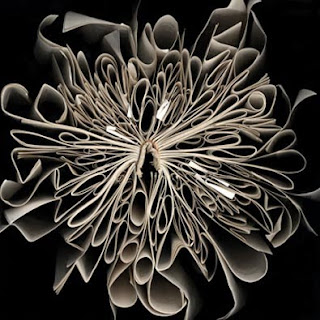
Butterfly

Texan artist Cara Barer bases her work on taking photographs of the edges of pages, in whimsical and elegant positions. Her inspiration came when she photographed whe intricately bent pages of a wet Yellow Pages book. After this, she moved onto other books, carefully positioning the pages into beautiful designs on a studio black background.


Barer does not consider herself a photographer, but simply an artist who uses photography. She takes into consideration the size of the book, the quality and colour of the paper, and her designs are often even influenced by the content of the book.

The final photographs are really impressive, and display great depth - it's unclear how they have been created on initial viewing, but I think discovering the 'page design' only makes them even more effective and inspiring. What an absorbing and original type of art.

Shitake


Thursday, September 17

Bunny Suicides

"Little fluffy rabbits who just don't want to live anymore"
I can't say I'd find it all that funny if I stumbled across my rabbit impaled on a light saber, but Andy Riley succeeds in creating one of the funniest non-textual books I've ever seen. His comical illustrations and endless ideas make this book highly entertaining, everytime.

Thursday, September 10

A Clockwork Orange

A Clockwork Orange was released in 1971 by director Stanley Kubrick, as an adaptation of Anthony Burgess' 1962 novel. The story follows psychopathic delinquent Alex Delarge and his gang of 'Droogs', whose interests and lifestyle largely revolve around a combination of classical music, rape and violence.

There's no question that the film is very controversial and disturbing at times, proven by the fact that it was originally banned in the U.K. and was largely censored in the U.S. However, what interests me most about the film is Kubrick's use of contrasting sound. Particularly during scenes of extreme violence and molestation, Kubrick has chosen to use classical pieces of music - particularly Beethoven - in order to portray the character's enjoyment. By using lively, classical pieces of music that the majority of the audience will recognise, Kubrick manages to enhance the shock factor of his film. This is also the case when Alex serenades his victims with 'Singing in the rain' whilst attacking and violently raping them - successfully creating unease within the audience.